

By Marina Gorbatiuc (Moldova State University)
For the first decade of post-Soviet independence, Moldova’s fledgling democracy faced challenging conditions. Obstacles include ethno-linguistic tensions especially it is speculated in election campaigns. Recent data on the census (April 8th, 2024) prove multilingual society in Moldova: Moldovan- 49.2%; Romanian- 31.3%; Russian- 11.1%; Gagauz- 3.8%; Ukrainian- 2.9%; Bulgarian- 1.2%; Romani- 0.3% other- 0.2%.
Moldova, which doesn’t yet meet EU membership criteria, has targeted joining the EU by 2030. EU membership appears a strategic necessity for both Moldova and the EU. Whatever happens, Moldova’s democracy and future in Europe are at stake in the ongoing battle over whether a European spring follows Moldova’s harsh Russian winter. When snow falls to earth, especially in large volume, it temporarily presents itself to people who must interact with it and these people can, by consequence, become temporarily democratized by relations. Our people have already proven their favour in the referendum ‘veni, vidi, vote’ (50.35% of votes, compared to 49.65%) for EU membership. In this fight, Moldova stands as a symbol of resilience and determination. Despite being outgunned and outfinanced, we have not given up. Our path to Europe is a conglomeration of values: peace, security, and democracy. But to finish the journey, we need the ongoing support of our European and global partners, from investment in our economy and institutions. As we move forward, let’s remember that democracy is fragile but it is worth fighting. With our people’s determination as well as our partner’s support, Moldova will secure its place in the EU. Obviously, if resilience had a passport the column “citizenship” would be “Moldova”. It’s a country of strong people.
Elections as a crucial signal well beyond Moldova
In spite of all challenges, Moldova voted in a free and fair election for Europe. Moldova’s parliamentary elections were crucial because they determined whether the country remains firmly on its European integration track or is pulled back toward Russian influence.
The electoral campaign in Security Zone was competitive, all freedoms were respected. It ran from 29 August to 26 September, but more active in the closing weeks. Campaigning methods included rallies (three with PAS, PSRM, Our Party), community meetings, door–to–door (the Alternative Bloc) and leaflet distribution (PAS, PSRM, Our Party, Respect Moldova). Issues such as corruption, foreign interference also featured in the campaign. For Transdniestria were opened 12 polls, two of them in Security Zone were moved to Chisinau two days before election.
Election day was held on 28 September at 1,973 polling stations across the country (including 12 for voters residing on the left bank of the Dniester/Nistru River) and 301 polling stations abroad. Turnout, however, has been low again. Just 52,21% (3,299,396 registered voters) of eligible voters went to the polling stations (2, 274). This is slightly higher than in the three previous parliamentary elections in 2019, 2020, and 2021, but below the turnout in the second round of last year’s presidential elections. The ruling pro-European Party of Action and Solidarity (PAS) has achieved 50,20% of the vote. The party doubled its vote share in the Russian-controlled break-away region Transdniestria. More importantly, perhaps, it has garnered more than twice the votes of the main pro-Russian opposition Patriotic Bloc has 24,20% of the vote. The outcome decided who forms the next parliament, a decisive moment for Moldova and its citizens. After the storm comes calm and will be noted with significant relief in Chisinau, Brussels, and other European capitals.
Hopeful wind of change: dynamic progress in legal framework
The parliamentary elections were regulated by the Electoral Code, most recently rewritten in 2022 and its subsequent amendments implemented many prior ODIHR and Venice Commission recommendations, as well as the law on postal voting. The legal framework related to campaigning was also improved by the introduction of a ban on early campaigning, the limiting of campaigning to only registered competitors with related administrative sanctions now imposed.* It provides a sound basis for democracy.
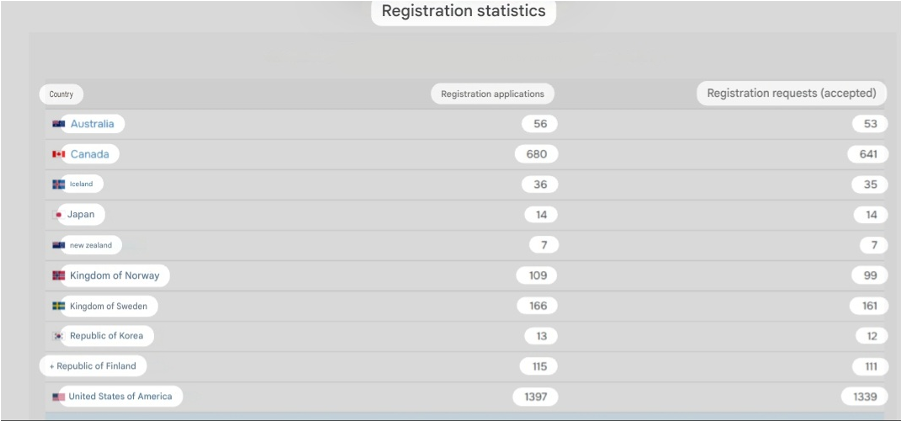
Introduction in the law the option of postal voting for diaspora voters was the opportunity well ahead for this election, as well as good practices from other OSCE participating States in this field. Last year its application on the 20th October, presidential election (and national referendum) showcased trust of the electorate in the integrity of such system. The Central Election Commission (CEC) offered the platform Registration for postal vote. Using this platform was free for all citizens who wished to try the right to vote.
The purposes of using it:
a) to ensure the exact establishing of voter numbers;
b) compiling the voter’s lists;
c) to ensure the accessibility to vote abroad.
Obviously, this step of postal voting implementation responds to a necessity to facilitate diaspora voting for actively participating in elections, including long travel to reach polling stations abroad, long queues and long waiting times.
To sum, after tense election, with many trials and challenges, Moldovans chose liberal democracy, peace, development and European direction. New Parliament, new the “power of heal” will work diligently and focus on the completion of justice reform, an accelerated focus on European Integration and tackling the complex issue of territorial-administrative reform.
The parliamentary election also indirectly decides on the formation of the Government, as the Parliament proposes a new Government (head of Government) by majority vote. Moldova has already done its firm decision by showing the results of parliamentary election. Moldova really has delivered and now it’s time for the EU to deliver too, and give Moldovans a real perspective, a real path that inspires trust, spark dialogue to joining the Union. The famous novel Anna Karenina (Leo Tolstoy) principle states that a deficiency in any one factor dooms an endeavor to failure. Following this principle, every new European Union (EU) member state is succeeding in the same way and every state in the EU’s eastern neighborhood is failing in its own way. We believe Moldova could join that outer tier right now.
* Note: In addition, Law 130, amending the Electoral Code and LPP, was adopted on 29 May without public consultation.
Photo source: Report on parliamentary election results, 28 September, 2025 the Central Election Commission (CEC)